Most of the power bill leaves through a pump.
Pump sets, drives, valves and mains, sized for the demand the system has now rather than the one it was built for.
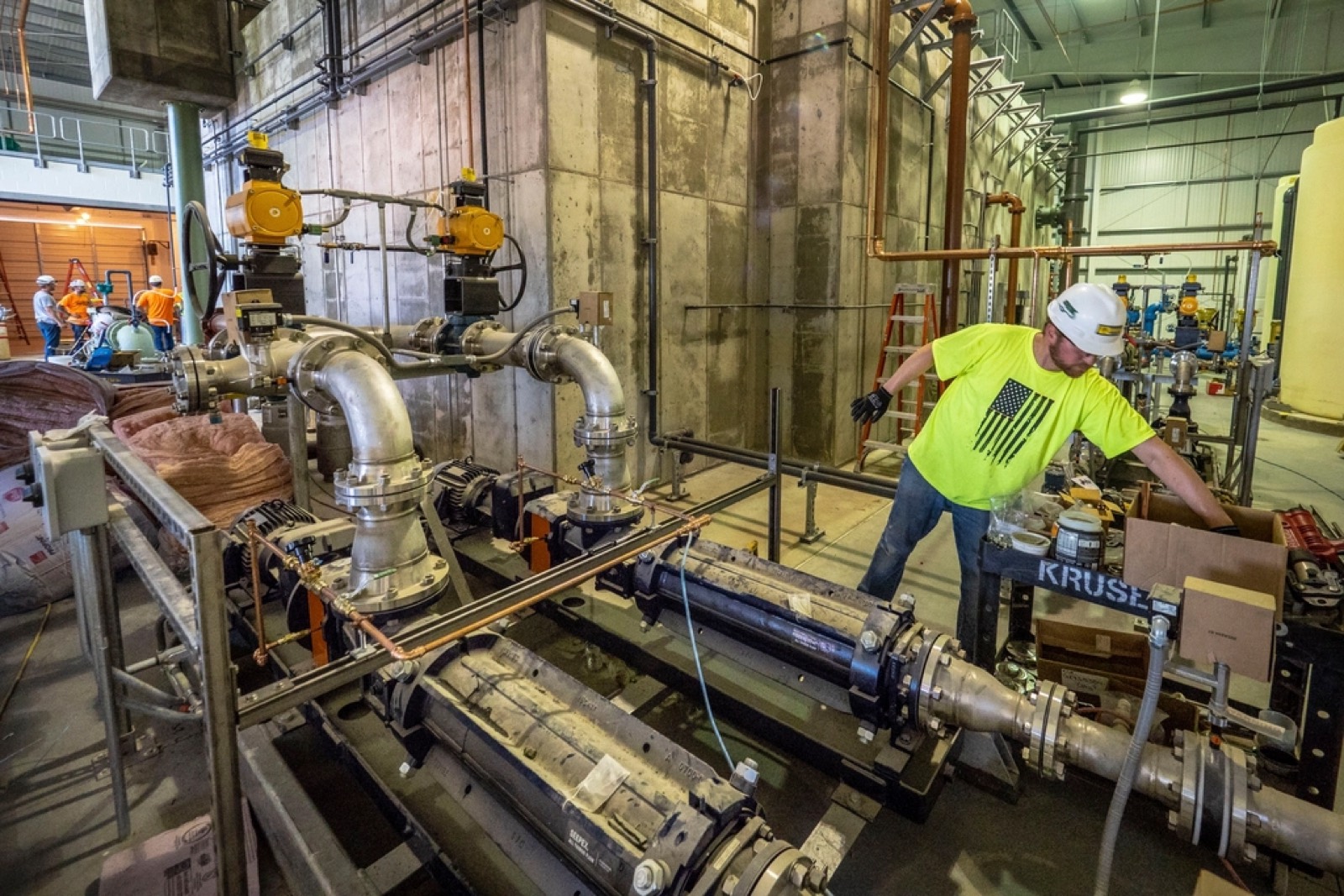
Pumping is usually the largest electrical load a water system has, and it is almost always oversized. Demand curves shift over decades; pump curves do not. What is left is a machine throttled at a valve, burning the difference as heat.
That profile is exactly what efficiency programs are built to fund: a large, measurable load, a saving that can be modelled, and equipment with a published efficiency rating. It is the easiest custom rebate a utility will ever write, and the one most often left unclaimed.
On the distribution side the equivalent is loss. A system that does not know what it puts in and what it bills cannot argue for money, which is why metering usually goes in the same application as the pumps.
What a project here usually includes
- End-suction, split-case, vertical turbine and submersible pump sets
- Variable frequency drives, soft starts and motor control
- Control, pressure-reducing and air-release valves
- Mains replacement, tie-ins and pressure management
- Surge protection and the modelling to size it
- 20–50%
- typical pumping energy reduction with drives and correct sizing
- 1
- application that usually covers pumps and metering together
- 6
- weeks of metering we ask for before writing the baseline
Programs that tend to fit
Which of these applies depends on who owns the site and where it is. That is the first thing we check.
-
State and utility efficiency rebates
Almost any metered systemPrescriptive rebates on listed equipment and custom rebates calculated from modelled savings. Pumping is often the largest electrical load a utility has, which makes it the easiest place to build a custom claim.
-
Drinking Water State Revolving Fund (DWSRF)
Public and community water systemsState-administered low-cost loans, and in many states a share of principal forgiveness, for treatment, storage, mains, meters and resilience work on systems that serve the public.
-
Rural Energy for America Program (REAP)
Rural businesses and agricultural producersUSDA funding for energy efficiency improvements, which on a water system usually means pumps, motors and variable frequency drives rather than anything exotic.
Send us the nameplate data and a recent bill.
That is usually enough to say whether the pumping load is worth funding, before anyone visits.